

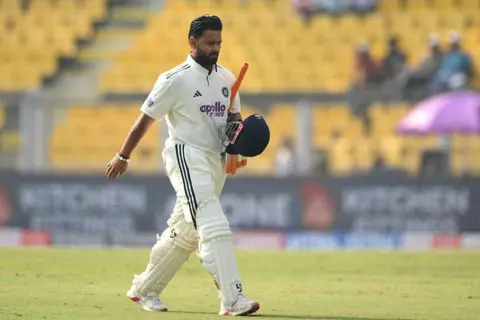
The Indian cricket team's surprising 0-2 loss to the Proteas in the just finished red-ball series has sent shockwaves through the squad.
Just days ago, the visiting team handed India a record Test defeat by runs, contrary to predictions. It was the Proteas' maiden series victory in India in a quarter-century and India's second defeat at home in just 12 months after a 12-year invincible streak.
The winning rhythm built over the previous half-year has almost disappeared and the futures of a number of cricketers - including head coach the coach - are now uncertain.
Early Optimism Fades Quickly
The emerging side's strong showing in the UK this summer, under a fresh leadership, suggested a smooth transition after the close together exits of veterans R Ashwin, Rohit Sharma, and Kohli.
A straightforward 2-0 victory over West Indies at the beginning of the home campaign boosted that belief, until the Proteas arrived to deliver a fell blow.
The home side were somewhat unlucky that skipper Gill suffered an injury very early in the initial match and did not participate again in the contest. But that does not excuse or justify the team of the well below standard performance in both Tests against South Africa.
Some big reputations were damaged, and multiple individuals aspiring to long red-ball careers were shown as still inadequate - in skill or mindset - for the longer format.
A Troubling Pattern
This was the second whitewash on home soil experienced by India in just over a year. Last year, unfancied New Zealand had achieved a surprising 3-0 win which effectively cost the hosts a spot in the WTC final.
The latest loss to South Africa could damage India's hopes of making the showpiece of this edition too.
After being third in the WTC rankings prior to the contest, the side have dropped to the fifth spot. Though nine more Tests are still to come, a majority are against the Aussies. Ordinarily, competing on home turf would be a huge advantage - even when facing the mighty Aussies. However the disasters against New Zealand and the Proteas provide no basis for that confidence.
Roots of the Decline
India's weakness in red-ball cricket has been clearly revealed. Nevertheless, why India have struggled so much in Test matches on home soil in recent times is still bewildering.
From the year 2000 onwards, India were regarded as unbeatable in red-ball cricket at home. In hot, humid conditions and on surfaces that favored spin bowling and suited their batsmen and bowlers, India brooked no opposition. A rare failure, such as in 2012-13 against the English, was considered an aberration.
Currently, the team look to be vulnerable in their own backyard.
Against New Zealand in 2024 and South Africa this year, India were beaten at their own game. The pitches they developed to favor their game backfired spectacularly, as the opposition capitalized on them more skillfully, outplaying India's batsmen and bowlers when it counted the most.
What's Gone Wrong?
Certain analysts propose that India is failing in home conditions because local wickets have been altered from spinning tracks to pace-friendly pitches to train the squad to succeed overseas.
Some point out that the IPL, in which numerous foreign cricketers play, has reduced the surprise and difficulty home wickets would present to them before.
Even though there is some truth in both analyses, it fails to account for the reason the side's results at home have experienced such a dramatic drop.

Multiple Failings
The majority of ex-cricketers identify a multi-faceted challenge, not just a couple of reasons.
Analysts and squad members have identified various flaws after India's disappointing performance to the South Africans: underrating the rivals, inadequate readiness, flawed selections, overconfidence, regular alterations of the starting eleven, and favoring limited-overs over red-ball cricket.
This was clear in the displays of the team.
Cricketers such as Rishabh Pant and Jaiswal, of whom so much was expected, were punished for their carelessness, while Sai Sudarshan, Nitish Kumar Reddy, and Dhruv Jurel - who were aiming to establish their position in the squad - fell short in skill and mindset, paying a heavy price for their nonchalant approach.
Just a few - Ravindra Jadeja, Bumrah, Kuldeep, Siraj and Sundar - lived up to their talent and reputation - but not well enough to claim wins.
Management Questions
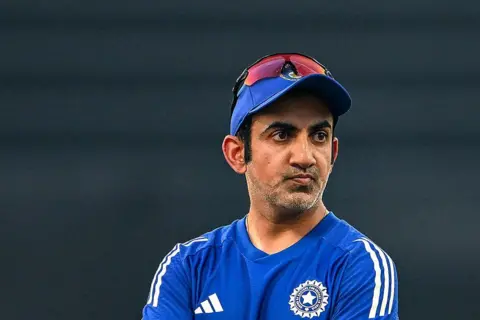
The post-mortem didn't spare just the players - team selectors and coaching staff were also criticized, driven by disappointed supporters and outspoken ex-cricketers. In the spotlight of the examination was head coach Gautam Gambhir.
During his post-series press
